
Augusta County Arrest Warrant Process
An arrest warrant is a written order that lets law enforcement take a named person into custody. Virginia Code §19.2-71 sets the authority: a magistrate, judge, or authorized clerk may issue one after a sworn complaint or other lawful basis shows probable cause. The document names the charge and directs an officer to execute it. In Augusta County, a complainant or officer brings the information to a magistrate, who reviews the allegation and decides whether to issue process. The case then lands in Circuit, General District, or Juvenile and Domestic Relations court, depending on subject and stage. Keep in mind that a public docket may reveal less than the signed warrant or the agency's current record. Reading the docket alone can leave you with an incomplete picture of where things stand.
Augusta County Magistrate and Court Roles
The Augusta County magistrate's office sits at the courthouse complex and can explain general issuance routing; its published phone is (540) 245-5015. That number is not a warrant-status hotline for the public. The clerk of the court handling the charge can identify the case, the hearing, and what filings exist. Service questions go to the Sheriff's Office, which keeps its own records. Criminal matters also move between stages. A General District case may be preliminary, a felony can head to Circuit after indictment, and a juvenile or family file belongs in JDR. Use the court printed on the summons, warrant, or case entry. Assuming every criminal process sits in one clerk's system will send you to the wrong window.
What an Augusta Arrest Warrant Shows
Match a warrant paper or docket entry to the right proceeding through its identifying fields. Public court screens do not always reproduce the warrant document itself. So a field missing from a search result does not mean it is absent from the signed process in Augusta County.
| Warrant or Case Number | Reference number used by the court or agency. Augusta publishes no single countywide warrant-number format. |
|---|---|
| Named Person | Person the order identifies; confirm spelling and other identifiers with the clerk. |
| Charge | Allegation supporting process; the charge remains an allegation until resolved. |
| Issuing Authority | Magistrate or court that issued the order and the court holding the case. |
| Bond Terms | Set or changed by an authorized judicial officer; do not infer terms from another case. |
| Issue Date | Date on the document or docket; confirm whether the order remains active. |
Augusta County Warrant Squad Records
The Sheriff's Warrant Squad coordinates service with patrol and other law-enforcement agencies across Augusta County. Its published reports show real volume: 5,541 criminal warrants and 2,286 capias served in 2025, against 5,300 warrants and 2,039 capias in 2024. Those are service counts for each year, not an inventory of active orders. No public name-search roster exists. An annual tally cannot tell you whether a particular arrest warrant is still outstanding. For that, ask the court about the underlying case and the Sheriff about its agency record.
How Arrest Warrant Service Works in Augusta
The Sheriff's Office serves Augusta County process, and local police may act on warrants within their own authority or assist another agency. Officers can run into an order during a lawful stop, a call for service, or a planned service attempt. When and where are operational decisions. Nobody publishes a service schedule. After an arrest, the person goes through booking and is presented for a bond decision as required. Bond conditions, release, and the next hearing all depend on the case and the judicial order. Neither the issuing magistrate, the Sheriff's public window, nor an online case entry can promise a particular service method in Augusta County.
Augusta Felony Cases Can Move to Circuit
A felony investigation may start with a magistrate's arrest process and pass through a preliminary stage before indictment. Once an indictment is returned, Circuit Court holds the felony trial file and may enter capias process under Virginia law. That later file can look different from the first docket found in a general district search. Augusta Circuit Court's criminal division can route questions about an indictment or capias at (540) 245-5016. Before treating an earlier case result as current, ask which case number and court action now controls. In Augusta County, the newest court record, not the oldest search hit, tells you where the case lives.
Augusta Circuit Court criminal informationAugusta County Warrant Records and OCIS
The Virginia Online Case Information System covers many adult criminal and traffic dockets, plus selected Circuit and JDR information for Augusta County cases. It is a case-record search, not a live warrant-clearance system. A visible charge, bond entry, or hearing date does not establish that the warrant is current, served, recalled, or eligible for payment. Search by court and case number when you can. Juvenile and confidential family records stay limited by law. The clerk can explain which records are open and whether a separate request is required. Open Virginia Online Case Information to see the docket system itself, then compare any result with the court's own record before relying on it.
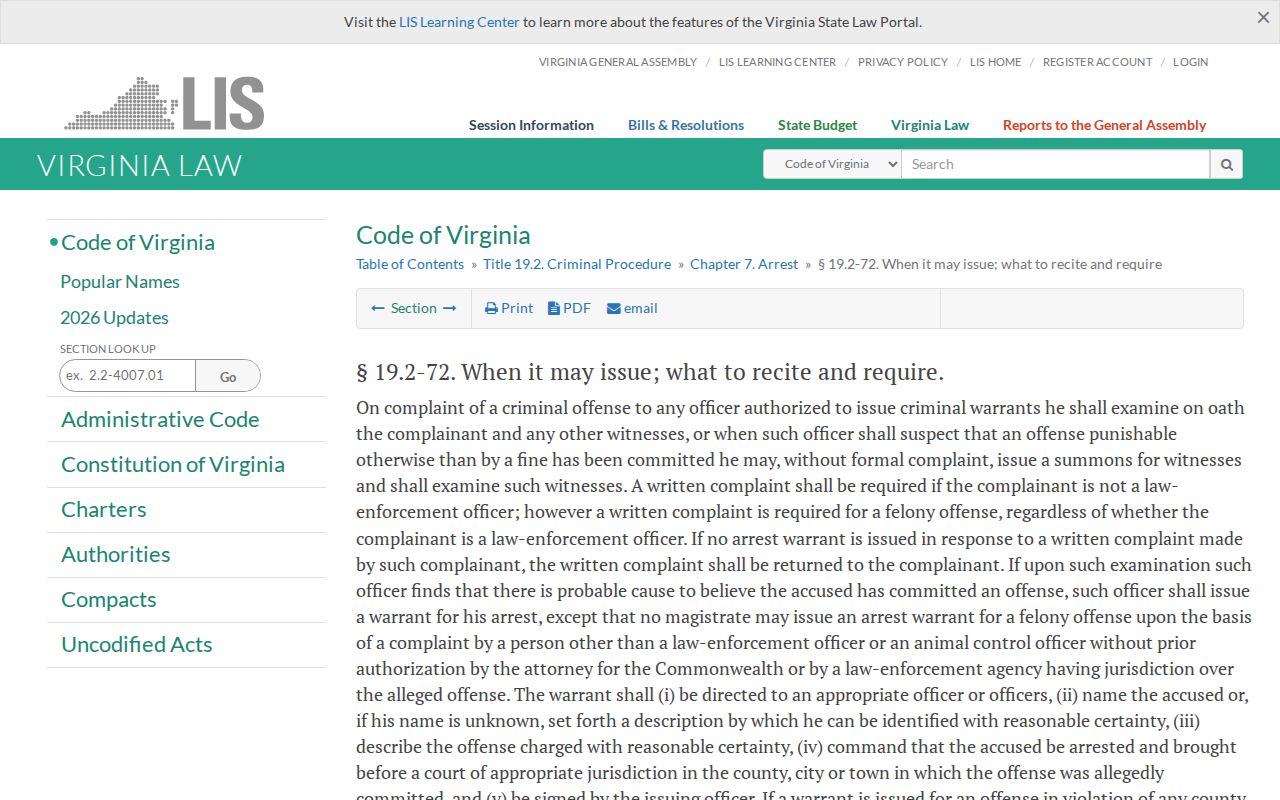
The statute explains who may issue a warrant in Augusta County; the clerk can confirm what was actually entered in a particular case.
Arrest Warrant, Summons, and Capias
These documents push a case down different roads. An arrest warrant authorizes custody on a new allegation after probable-cause review. A summons tells a person to appear without ordering immediate arrest. A bench warrant or capias usually follows an existing court obligation, though Virginia law also uses capias for felony indictment process. See the Augusta bench warrant steps for missed-date routing.
| Feature | Arrest Warrant | Summons | Bench Warrant |
|---|---|---|---|
| What It Orders | Arrest and custody | Appear at a stated time | Arrest for a court process or obligation |
| Basis | Probable cause of an offense | Charging decision and direction to appear | Missed date, compliance order, or indictment |
| Issuing Authority | Authorized magistrate, judge, or clerk | Court or authorized officer | Judge or other authorized process |
| Response | Confirm court, bond, and counsel | Attend as directed | Contact the issuing clerk about appearance or recall |
Augusta Arrest-Warrant Information Limits
Augusta County keeps some warrant material out of public view. An affidavit can hold sensitive investigative details, and records tied to an open investigation may stay sealed or withheld. Virginia law opens most court records, though statutory exceptions carve out plenty. The Sheriff's law-enforcement files are a different matter, and not all of them are open for inspection. So if you file a FOIA request, name the incident, the date range, and the specific record you want. Blanket asks for every warrant entry go nowhere. Augusta County accepts records requests through its FOIA request portal. A response is generally due within five working days, though permitted extensions and withholding rules can stretch that out, and fees may depend on search and copying time. A FOIA reply is no substitute for urgent confirmation with the issuing court.
What to Do About an Augusta Arrest Warrant
Confirm the details first. The Augusta County clerk can verify the court, the charge, the bond, and the next hearing date; so can your lawyer. If an active warrant does exist, counsel may arrange a voluntary surrender, post an allowed bond, or ask the issuing court to recall or quash it. The charge and the judge's order drive that choice. Paying a fine alone may not clear an arrest warrant.
Important: Speak with a Virginia lawyer before arranging surrender; the court must confirm bond and recall terms, and law enforcement may act on an active order.